
Wai at RedGob 2026: how human and AI agents work together inside a government office
Contents
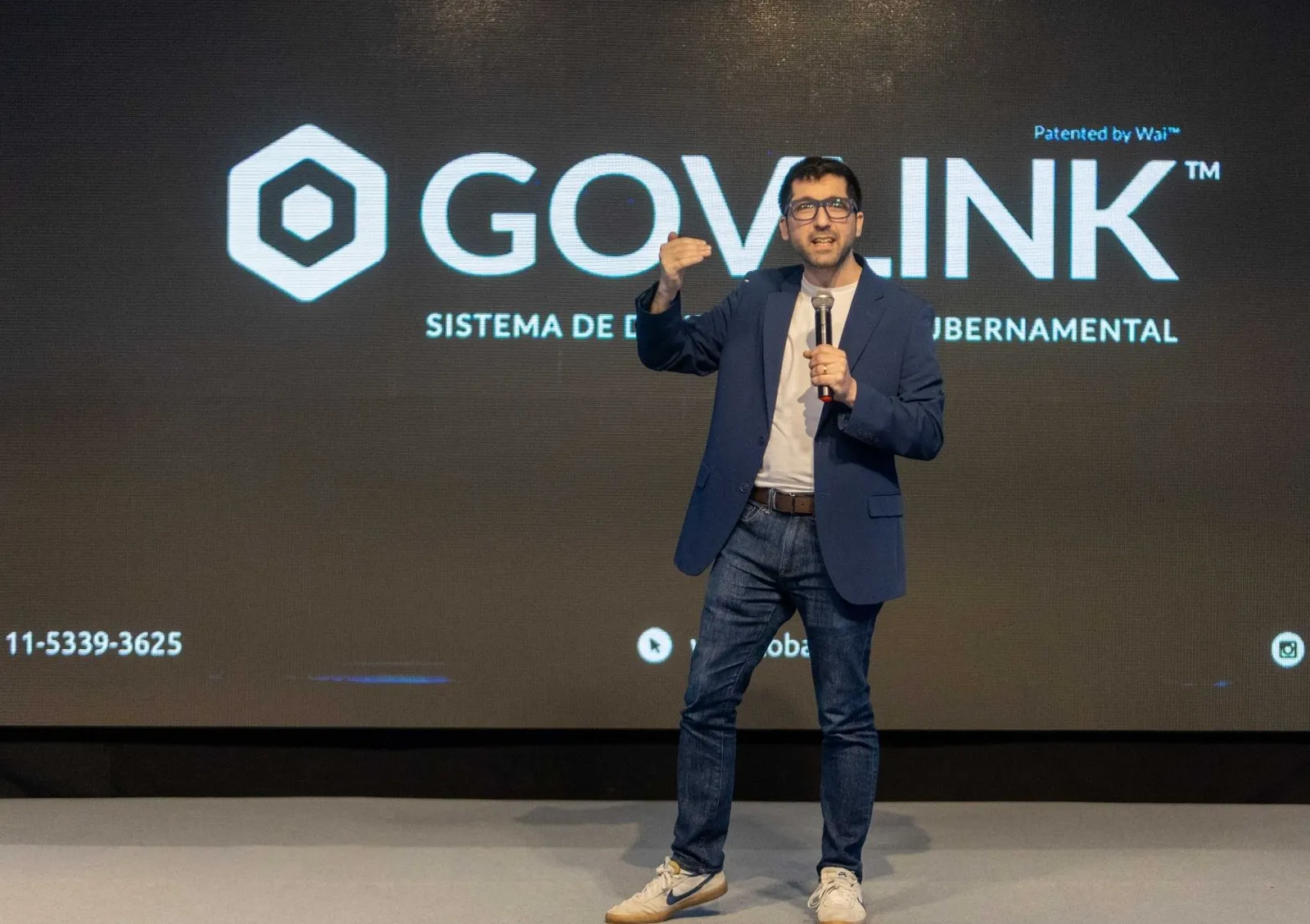
On October 7 and 8, at the La Punta Convention Center in San Luis, Argentina, Wai joins Redes de Gobierno y Ciudades Inteligentes. Nicolás Pstyga, CEO and co-founder, will speak about how work gets divided between public officials and AI agents inside a government body.
Redes de Gobierno y Ciudades Inteligentes is the gathering Grupo Convergencia has been running for two decades, and it brings together mayors, secretaries and technical teams from governments across Latin America. This year the province of San Luis hosts, and the theme of the edition is the operating model the organizers named GobIA: a state where public decision-making coexists with digital agents and automated processes.
Wai is back. In 2025 we spoke under the title "It's time to hack the state," built around an uncomfortable idea: the main obstacle to digitizing a government body is not technical and it is not budgetary, it is cultural. That message still holds, and we keep repeating it even when it does not serve us commercially: pick a system, even if it isn't Govlink™. What is not negotiable are the questions you ask first. Does it comply with Argentina's data protection law, or with whatever equivalent applies in your jurisdiction? Is it interoperable, or is it about to become one more data island? What does the contract actually say about getting your data out the day you decide to leave? And how is cybersecurity handled?
This year's talk
The title is a question: How do human and AI agents work together inside a government office?
It isn't rhetorical. It's the most concrete design problem facing any government that brings artificial intelligence into its operations. Public conversation tends to get stuck between two equally useless extremes: the excitement that AI will run the administration on its own, and the fear that it will replace public employees. What's actually happening is something else, less dramatic and far more consequential: administrative workload is being redistributed.
The talk will walk through how work gets split inside a real case file, where an agent belongs and where it doesn't, what happens to traceability when part of a procedure is executed by a system, and what a government body needs to be able to demonstrate to an auditor when that's the case.
The chatbot is the front door, not the house
Over the past two years, dozens of districts across the region took their first step with artificial intelligence, and almost all of them took it the same way: a citizen-facing chatbot. That's a reasonable call. It's visible, it ships fast, it takes pressure off the phone lines and the front desk, and it shows results within weeks.
The problem starts when that first deployment turns out to be the only one, and AI gets filed away mentally as "the bot that answers questions." That's where the technology gets undersold, because a chatbot improves how a resident asks, and changes nothing about what happens after they ask. The procedure still takes just as long, the file still passes through the same hands, deadlines still lapse for the same reasons, and the agency's operating cost is untouched.
Citizen service is the most exposed layer of government, but it isn't where the work lives. The work lives in the back office: classifying, docketing, checking requirements, chasing missing paperwork, issuing notifications, routing to the right department, tracking deadlines, assembling the file so someone can actually decide on it. That's where weeks get lost, and that's where an AI agent produces a change in scale rather than a change in appearance.

Agents handle the process, officials sign
Govlink™, Wai's digital government suite, already runs AI agents that handle procedures autonomously. They classify, docket, complete, route, notify, track deadlines and prepare the file so it reaches an official's desk ready to be decided.
What the agents don't do is sign.
The signature and the decision always stay with a person who holds the authority to make them. This isn't a technical limit we plan to lift in the next release, it's an architectural decision. Every administrative act (the formal legal instrument through which a government body exercises its authority) has an identifiable person accountable for it, and that accountability doesn't get delegated to a model. An agent can cover 90% of the path a procedure has to travel, but the will of the state is expressed by an official, with a signature, and with the evidentiary record that administrative procedure requires.
That boundary is what makes AI adoptable in the public sector. Without it, every step toward automation opens a fresh argument about validity, liability and nullity, and the argument is what kills the project.
Where to find us
The Wai team will be in La Punta both days, available to meet with governments evaluating how to digitize their processes or bring AI agents into their operations. There are also pre-event activities on October 6, with technical and management labs at Potrero de los Funes.
If your organization is attending and you'd like to set up a meeting, write to [email protected].
One last thought, back where we started. The question governments will be answering over the next few years is not whether they'll use artificial intelligence, because that's already happening, with or without a policy telling them to. The question is who signs. The governments that get that boundary right will be able to automate for real. The ones that leave it blurry will end up automating late, narrowly, and nervously.